
Cool Points
By Russ Jensen, PhD
Owner & Head Instructor, Ground Rules Academy
Behavior in pre-teen boys
I’ve observed a few behavioral trends in this group that I find fascinating. Some of the boys start working to impress each other in subtle ways — using slang (a lot), intentionally deepening their voices, and slightly pushing back on authority. In general, the boys are trying to be cool.
And this is completely natural. They’re scrambling to find their place in the social hierarchy, because not knowing where you stand among a group of males can be very uncomfortable. There’s a feeling of security in knowing who is going to lead and who is going to follow.
But boys rarely ever learn how to be cool. Let’s explore.
The confidence/manners plot
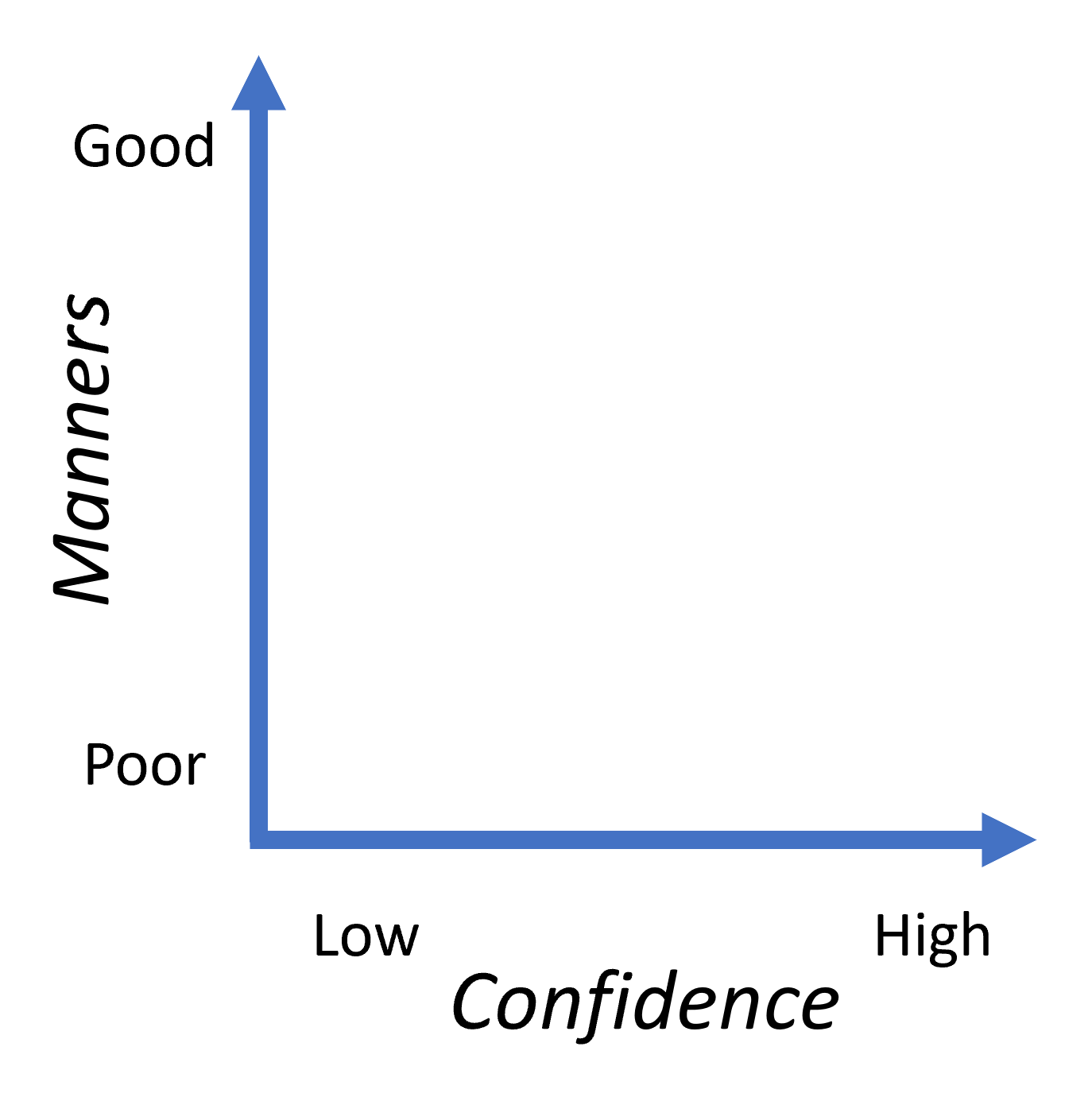
Let’s imagine a two-dimensional plot — the kind you’ll find in a middle school math class. We’ll label the two axes as confidence and manners. We don’t need numbers for this plot. We can imagine a score for confidence and a score for manners that increase as we move away from the origin.
Now imagine a boy who has low confidence and poor manners. Tragically, a boy like this will not be well liked — if he’s rude (poor manners) and does not even like himself very much (low confidence), then nobody else will like him either. We can assign him “cool points” based on the area his confidence and manners scores cover in the plot.
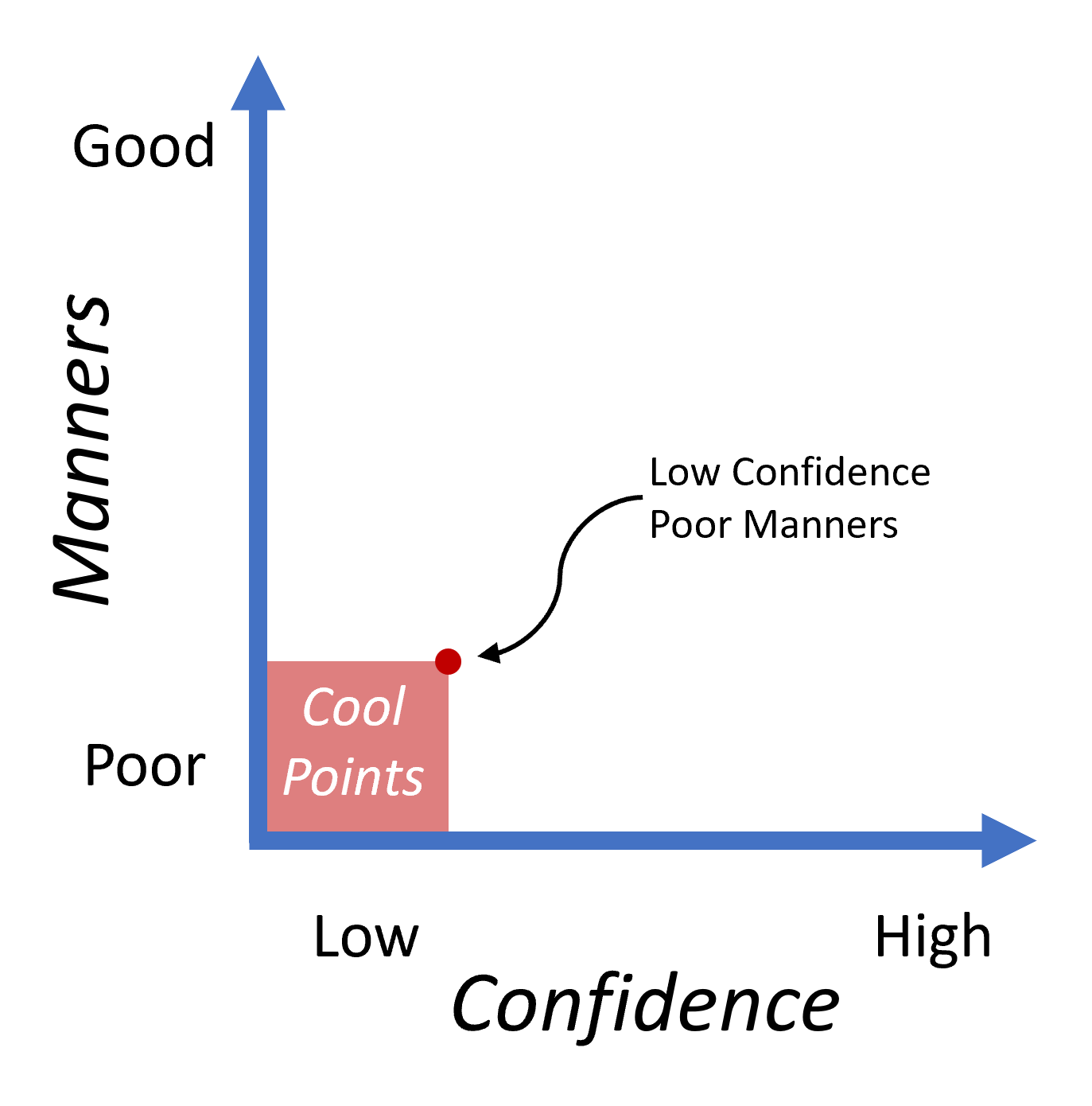
As you can see, this poor lad has minimal cool points.
But everybody is capable of growth and change. So let’s imagine he wants to earn the respect of his peers and get more cool points. He’s inspired to believe in himself. He thinks to himself “The other boys act confident, so I can too”. He begins speaking up, showing how strong and capable he is, using the latest slang, and trying to stand out. His confidence/manners plot changes and his cool points go up.
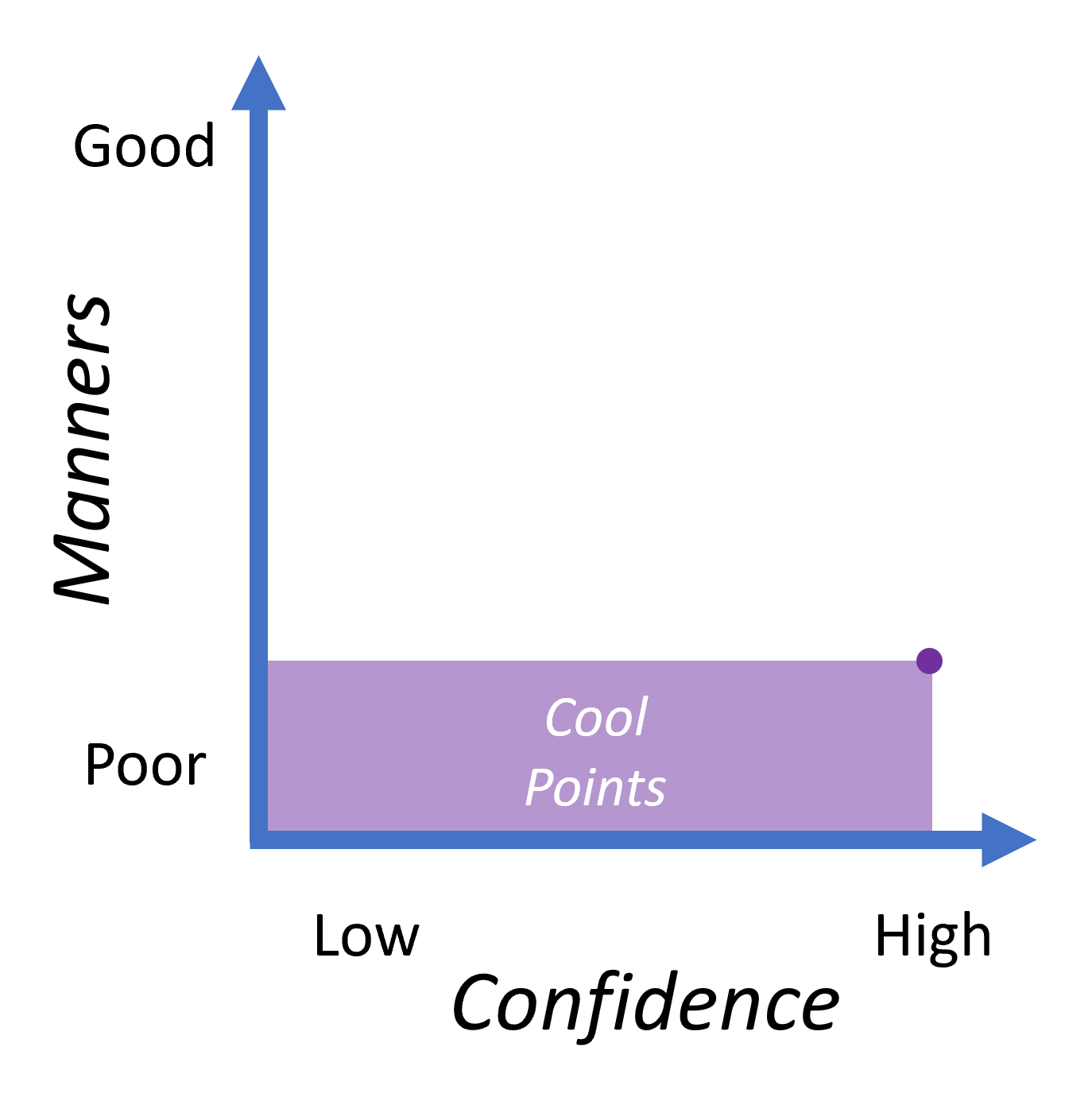
As his confidence grows, however, he runs into a big problem.
His manners are still poor. His classmates might think he’s cool, but his combination of behaviors earns him negative attention from parents, teachers, and other adults.
In order to unlock maximum cool points, he’ll need to improve his manners too.
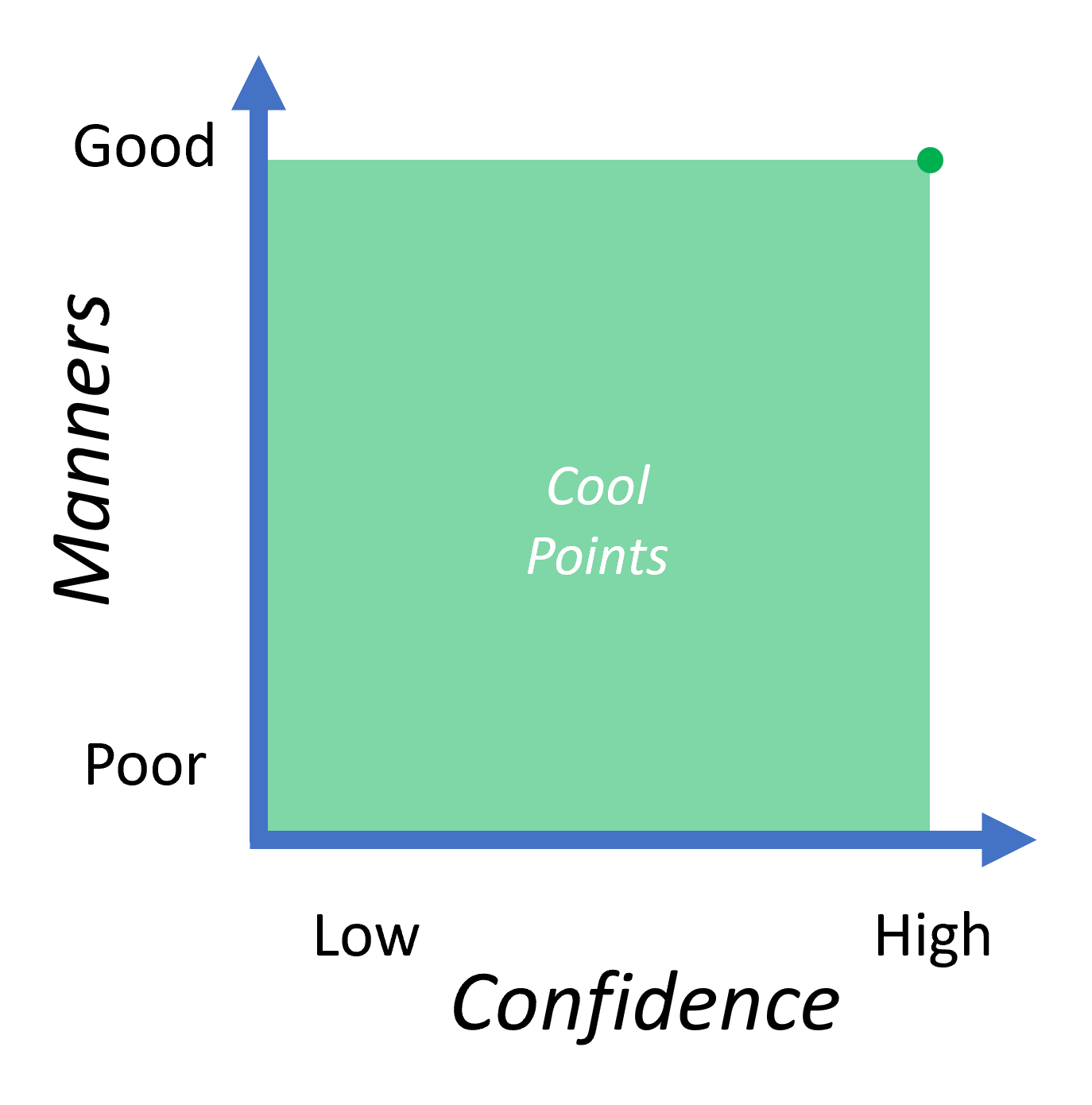
With a plot like this, he’s well-liked by everybody (except perhaps the “haters”, who With a plot like this, he’s well-liked by everybody (except perhaps the “haters”, who are boys and girls who have not learned how to maximize cool points yet). He has earned the admiration of his peers and mentors because he treats everybody with respect (manners), including himself (confidence).
How to get there
The most polite, confident, and likable people I’ve ever met are experienced grapplers. Wrestling, BJJ, or judo does not matter. And I suspect this trend extends to many other martial arts.
The mats teach us so much about respect for self and respect for others:
Training is very difficult. You develop mindset tools for avoiding emotional meltdowns and managing physical discomfort. As your capacity to tolerate difficult situations increases, so does your self-confidence.
You must maintain respect for your coaches and training partners. A rude, reckless, or negligent training partner will be deemed unsafe and will be corrected or rejected. Safely practicing physical violence requires control, patience, and awareness at all times. Traditional martial arts even formalize and enforce rituals of respect, such as bowing.
After years of training, you become confident in yourself and your ability, while maintaining a healthy respect for others. You become maximally cool.
Jordan Peterson says you even become good.
A couple questions
What are “cool points”?
Cool points are a simple way I think about how pre-teen boys show up socially. Confidence on one axis, manners on the other — the more of both, the more “cool points” you earn with peers and adults.
Why do some boys try so hard to look cool?
They’re figuring out where they fit. Slang, deeper voices, and a little pushback on authority are natural. The problem is when confidence gets built without manners — peers may buy it, but parents and teachers usually don’t.
How does grappling help with cool points?
Wrestling, BJJ, and judo all count. Hard training builds confidence through discomfort. The mats also demand respect, control, patience, and awareness — rude or reckless partners get corrected or left behind. Over time you get confident and respectful.
Is this a parenting lecture?
No. It’s one coach’s observation from the mats, plus why I think grappling is a useful path toward being both confident and respectful. Take what helps and leave the rest.
Russ Jensen, PhD is a Brazilian Jiu-Jitsu black belt and the founder of Ground Rules Academy in Pleasanton. With a PhD in physical chemistry from MIT, he brings a unique, science-based approach to teaching technique on the mats. He is the author of Ground Rules: Simple Physics for the Grappling Arts.